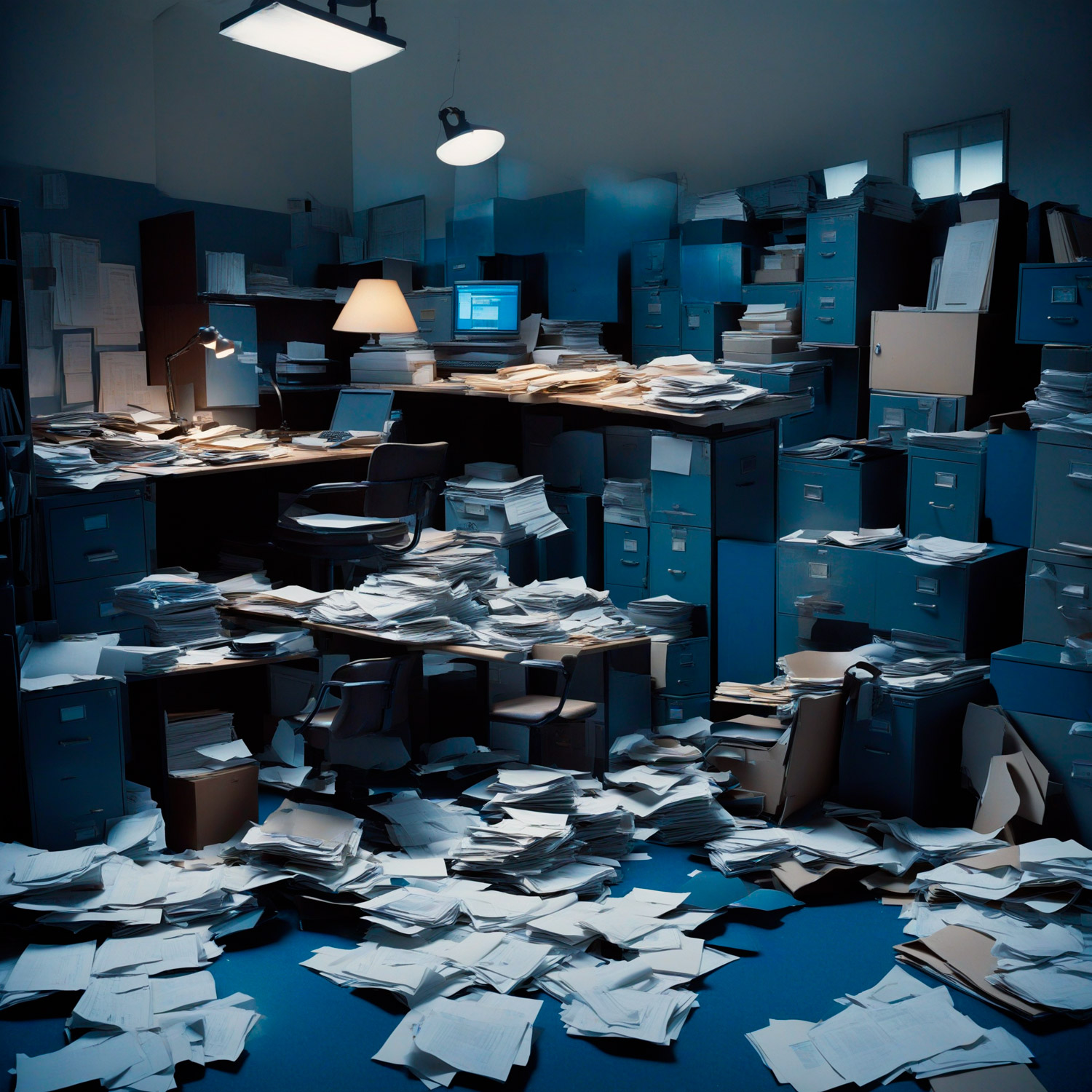
AI-generated image of an empty office buried in paper: blue filing cabinets stacked to the ceiling, desks piled with documents and loose sheets covering the floor under dim lamplight
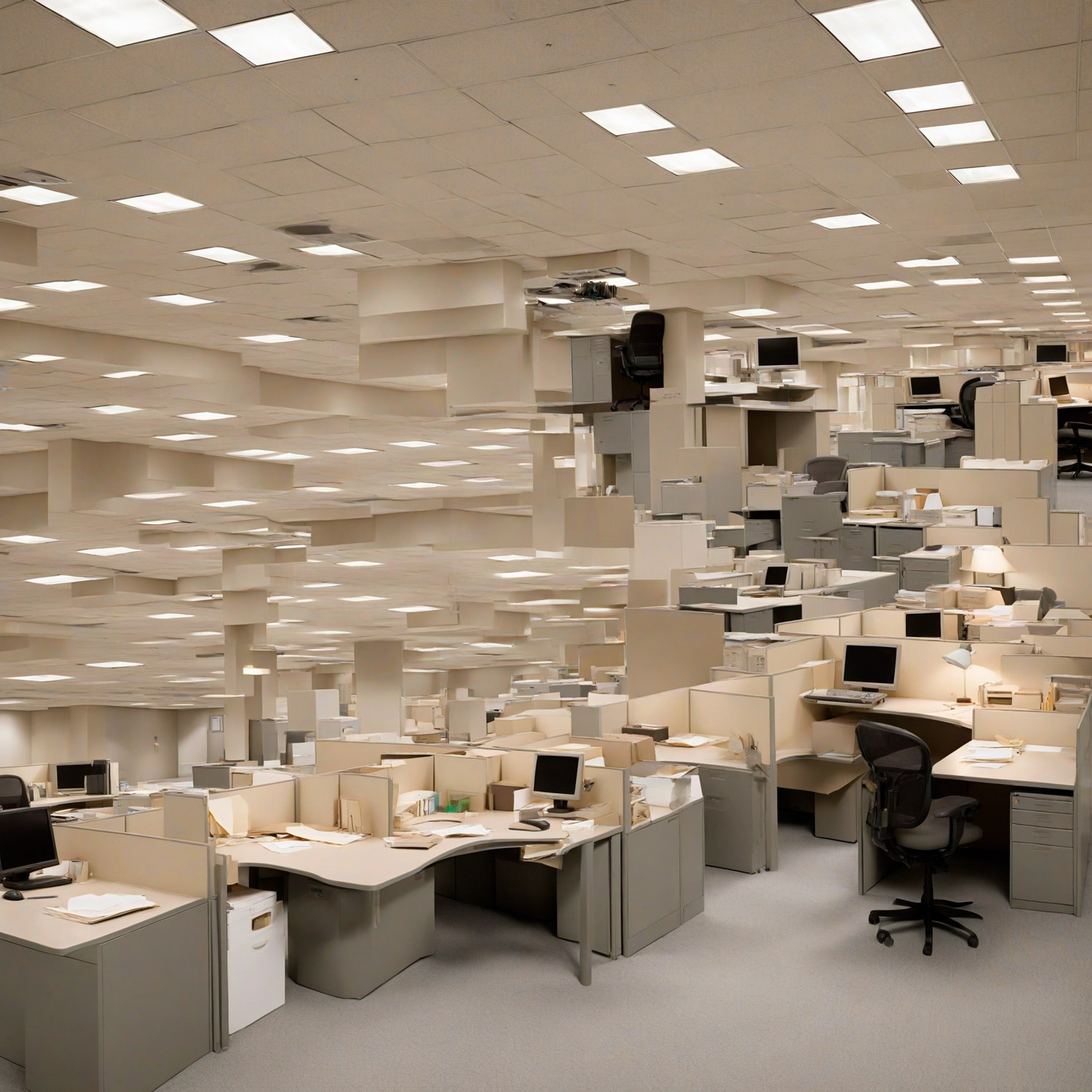
AI-generated image of an empty beige cubicle farm under a drop ceiling, where desks, chairs and filing cabinets climb impossibly up into the ceiling grid
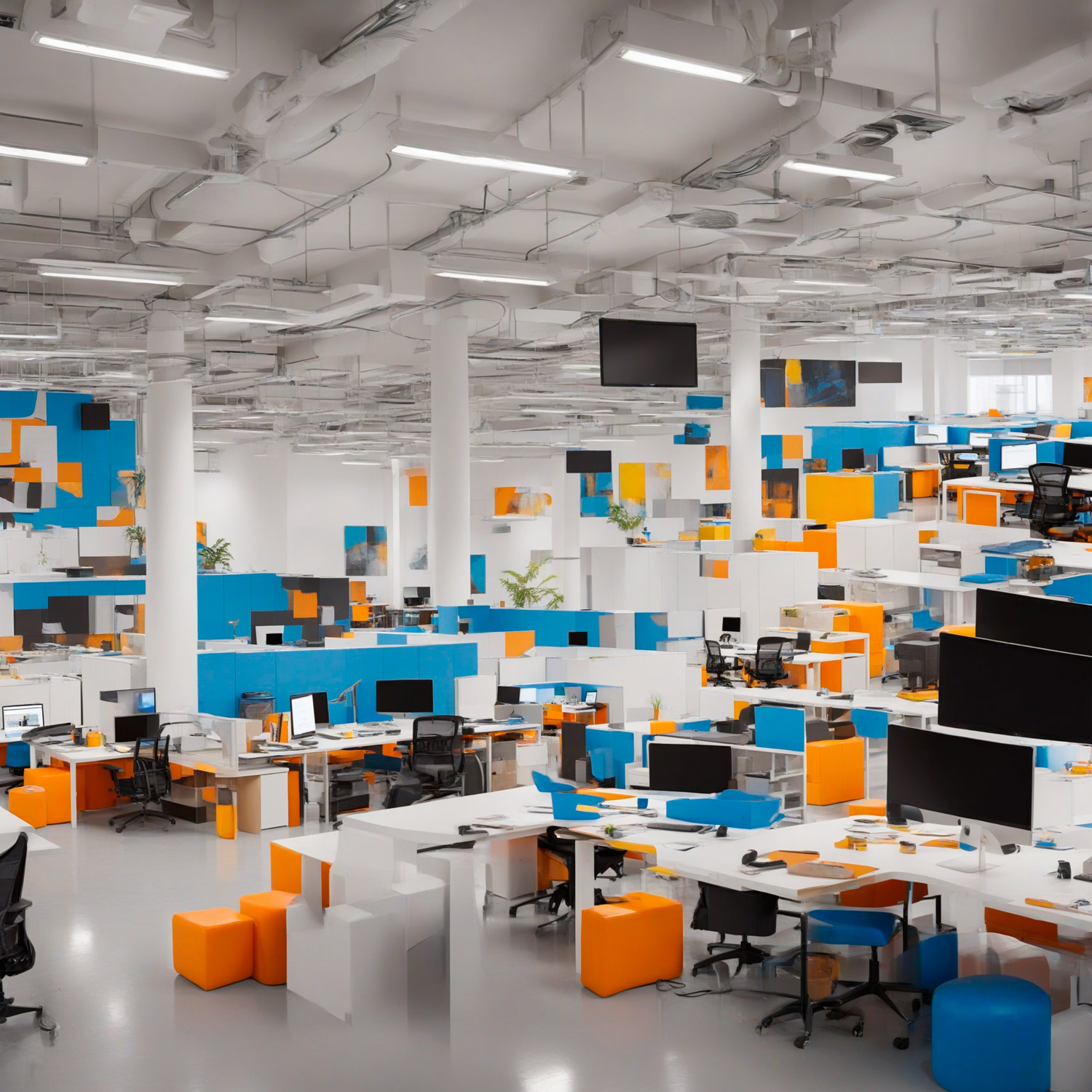
AI-generated image of an empty open-plan office in white, bright blue and orange, with desks, monitors and cube seats repeating into an endless warehouse-like space
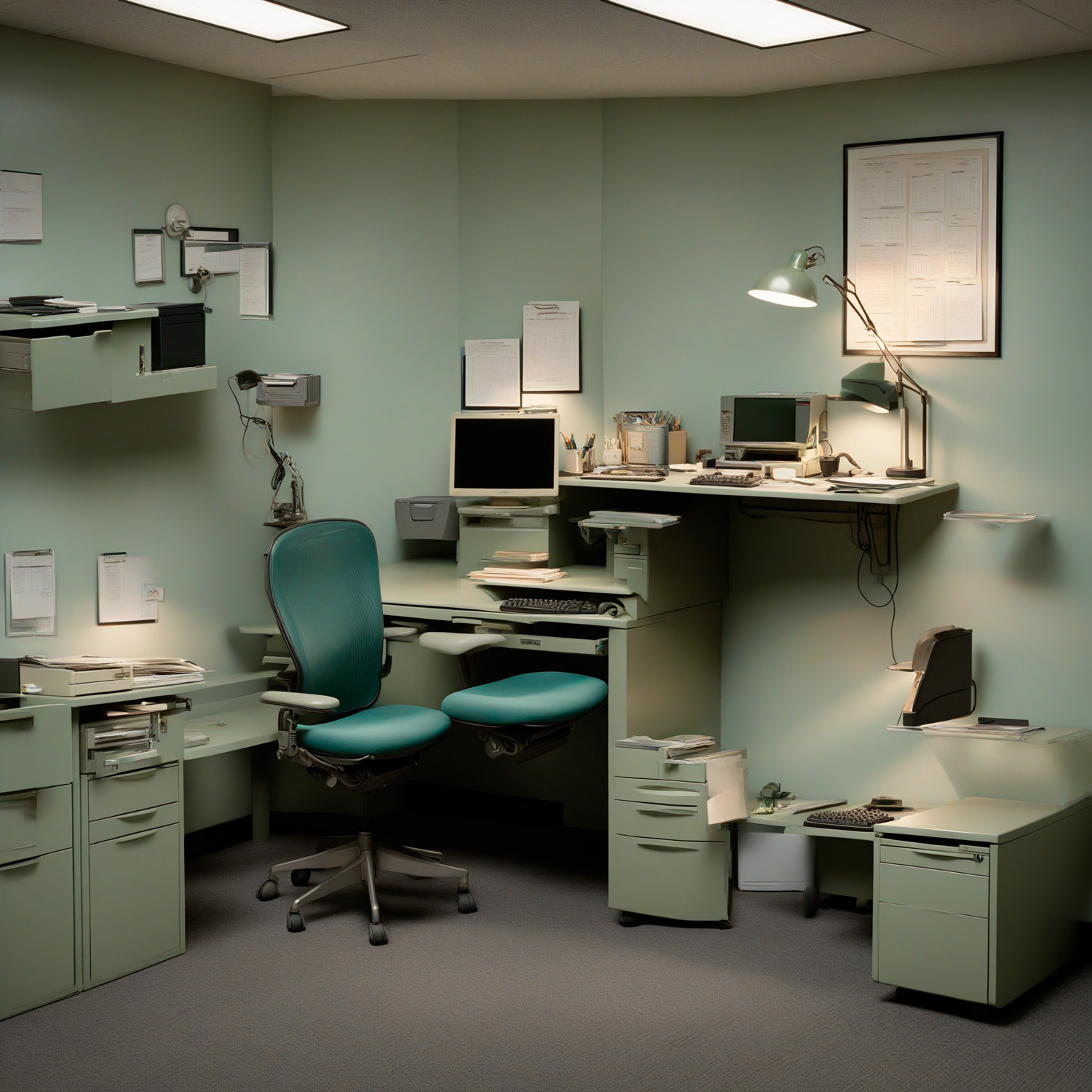
AI-generated image of a dim, empty sage-green office corner where a teal chair faces a desk and monitor, with drawers, shelves and a lamp jutting from the walls at odd heights
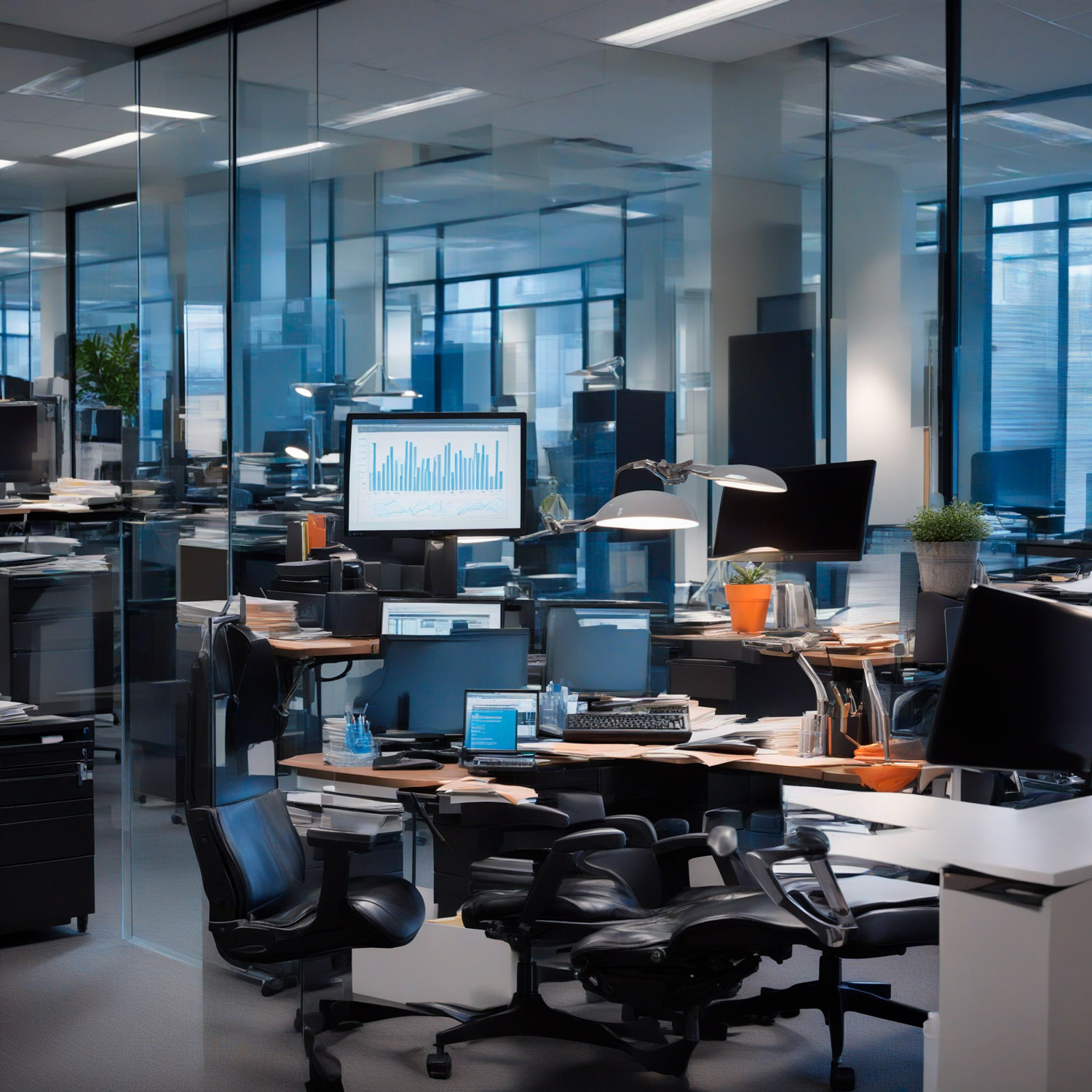
AI-generated image of an empty glass-walled office crowded with black leather chairs, desks, lamps and monitors showing bar charts, its reflections blurring the rooms together
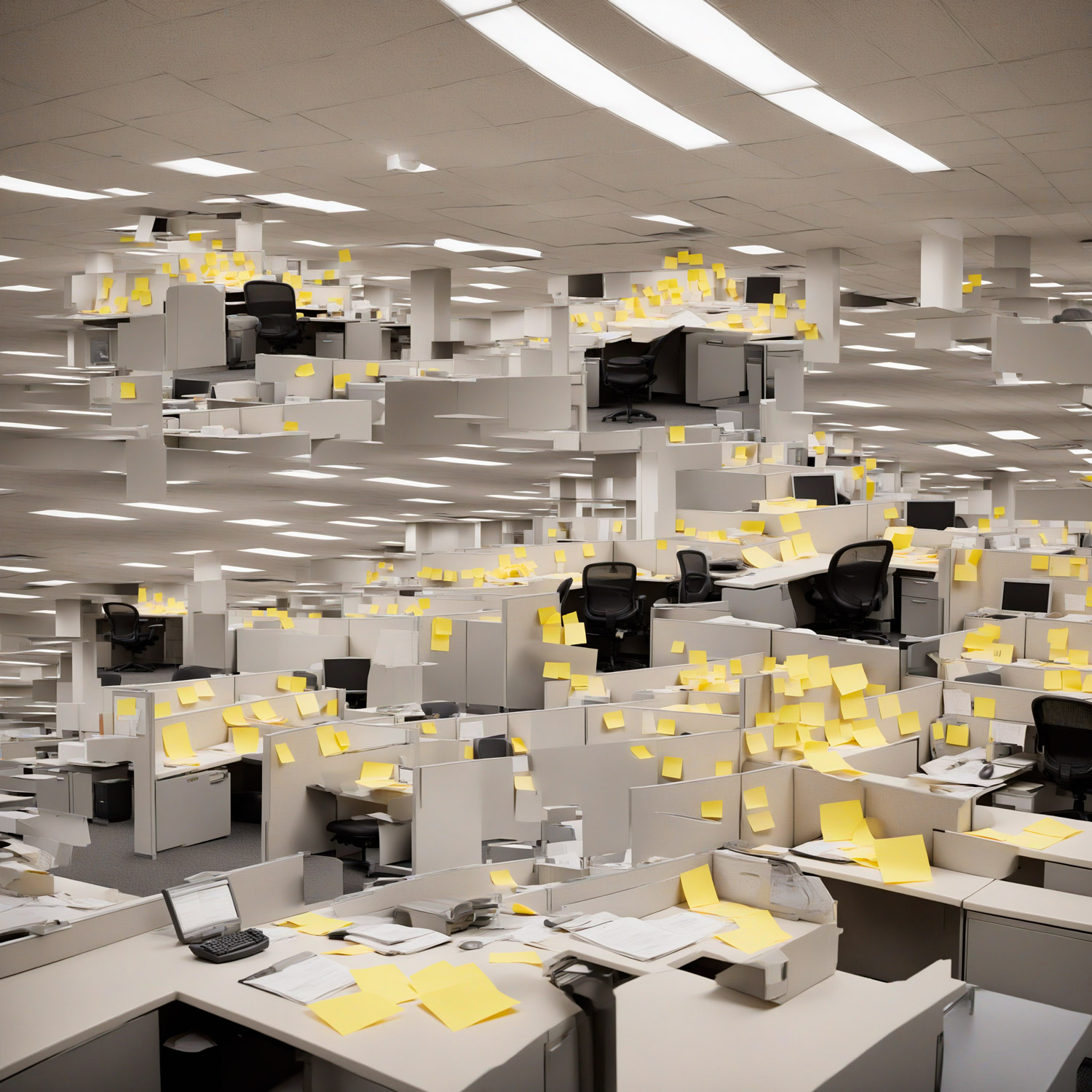
AI-generated image of an endless empty cubicle farm with desks stacked toward the ceiling, every surface covered in scattered yellow sticky notes

Empty Offices

I was experimenting with how to use AI to show an office environment devoid of humans. Not spaces simply without people, but that explored disorientation. How does AI imagine the workplace without the humans it’s intended to replace?

I wanted each image to feel familiar. Using office scenes from popular films, I asked Google Gemini to remove the humans from the scene. I used the resulting image and told Gemini to describe the image as a prompt.

Using ComfyUI and the Juggernaut SDXL stable diffusion model, I used the prompt to generate an image. I then tweaked the output settings until the disorientation began to surface. In this experiment, increasing the dimensions of the image output caused the model to hallucinate.

The results show spaces that appear as an attempt to design a workplace for humans if the designer had never observed how humans work.