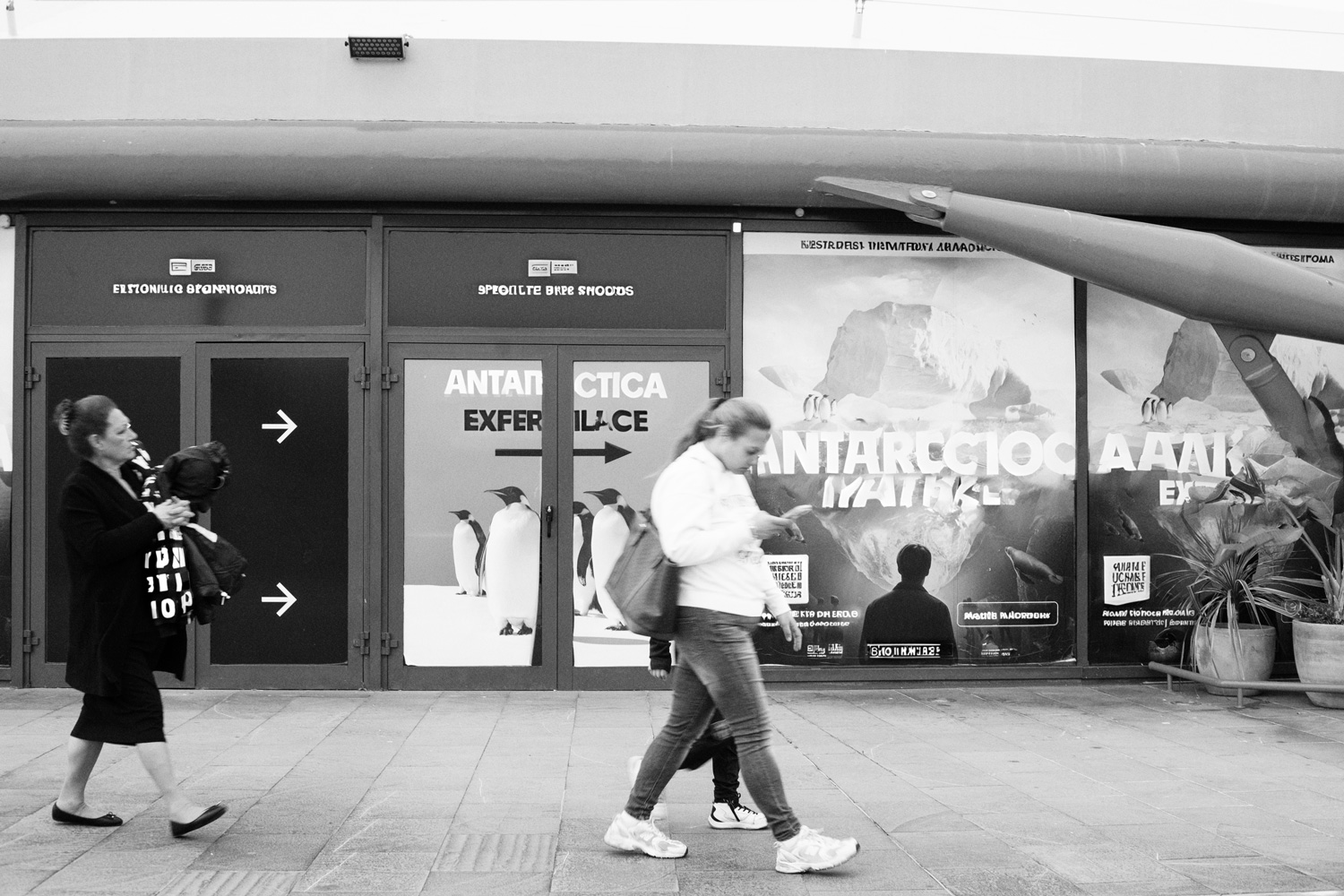

Black-and-white street photo of two women walking past posters for an Antarctica exhibition featuring penguins, with all of the signage rewritten in garbled AI-generated lettering
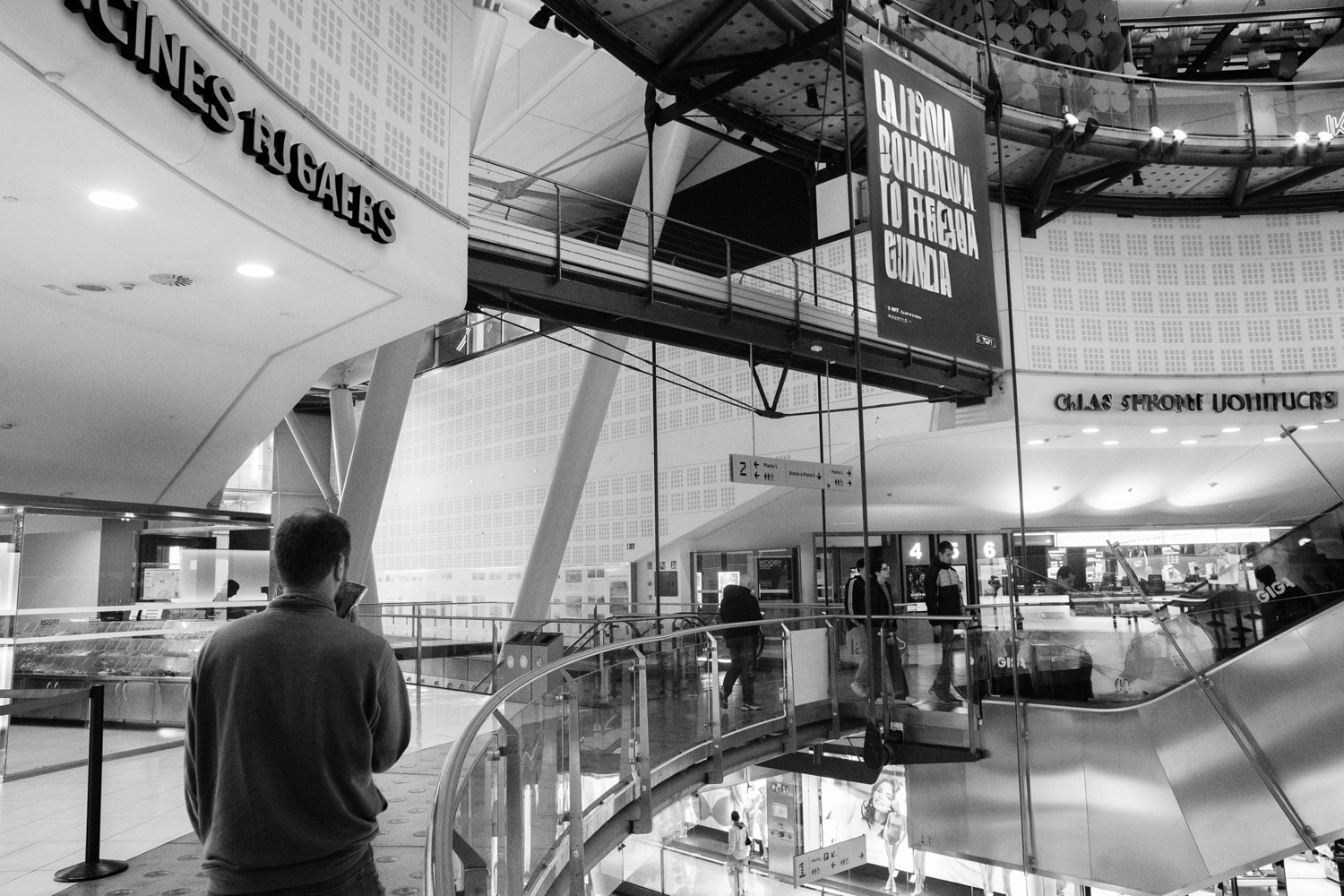
Black-and-white photo inside a multi-level cinema and shopping centre, a man in the foreground looking over the atrium, with the cinema sign, a hanging banner and shop names replaced by garbled AI-generated text
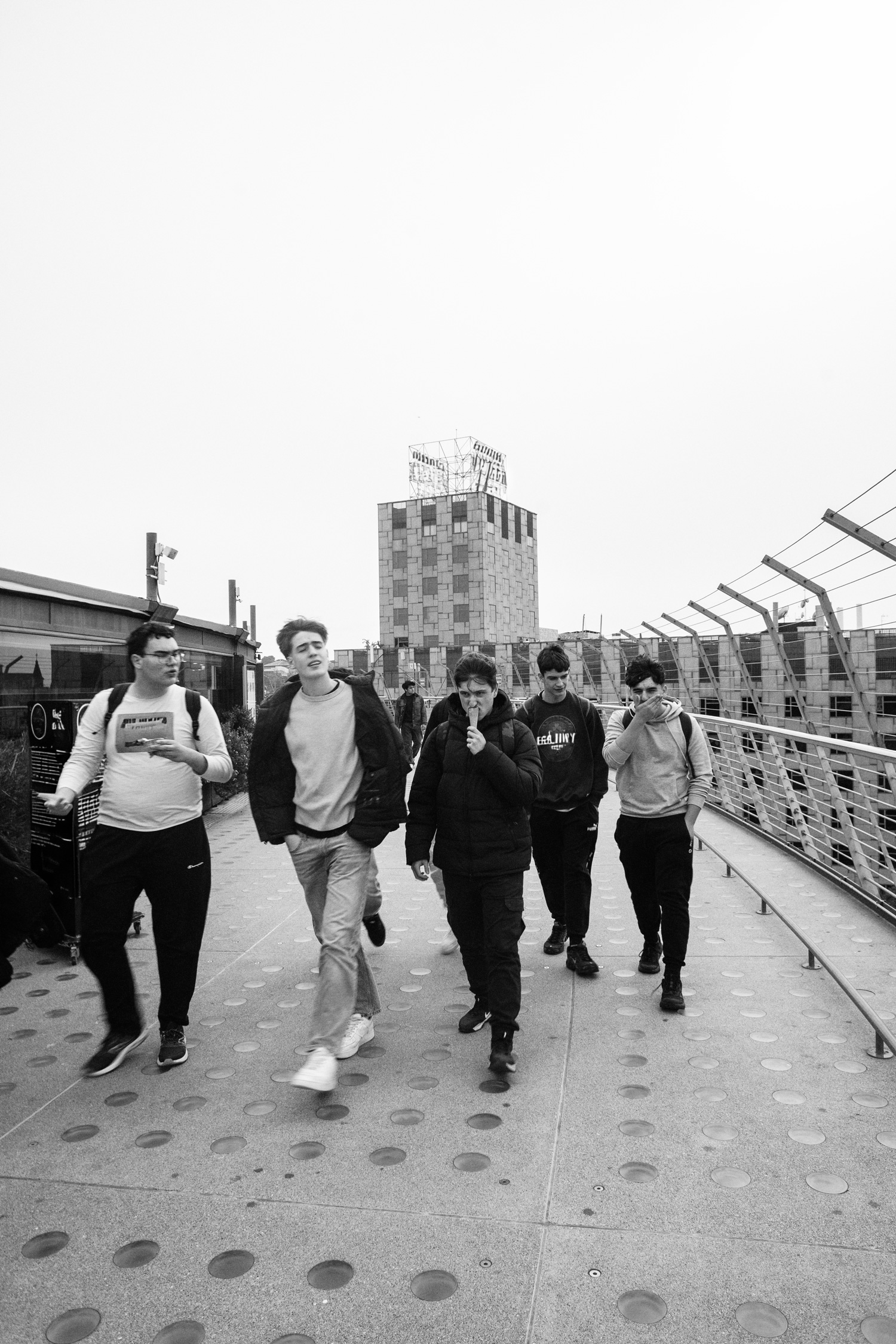
Black-and-white photo of five teenage boys walking toward the camera on a pedestrian bridge, one eating an ice cream, with a tower behind them whose rooftop sign is rendered in garbled AI-generated text
Black-and-white photo of a woman holding a phone to her mouth as she walks past a dark shop window whose illuminated sign reads 'Ousignal' in AI-warped lettering
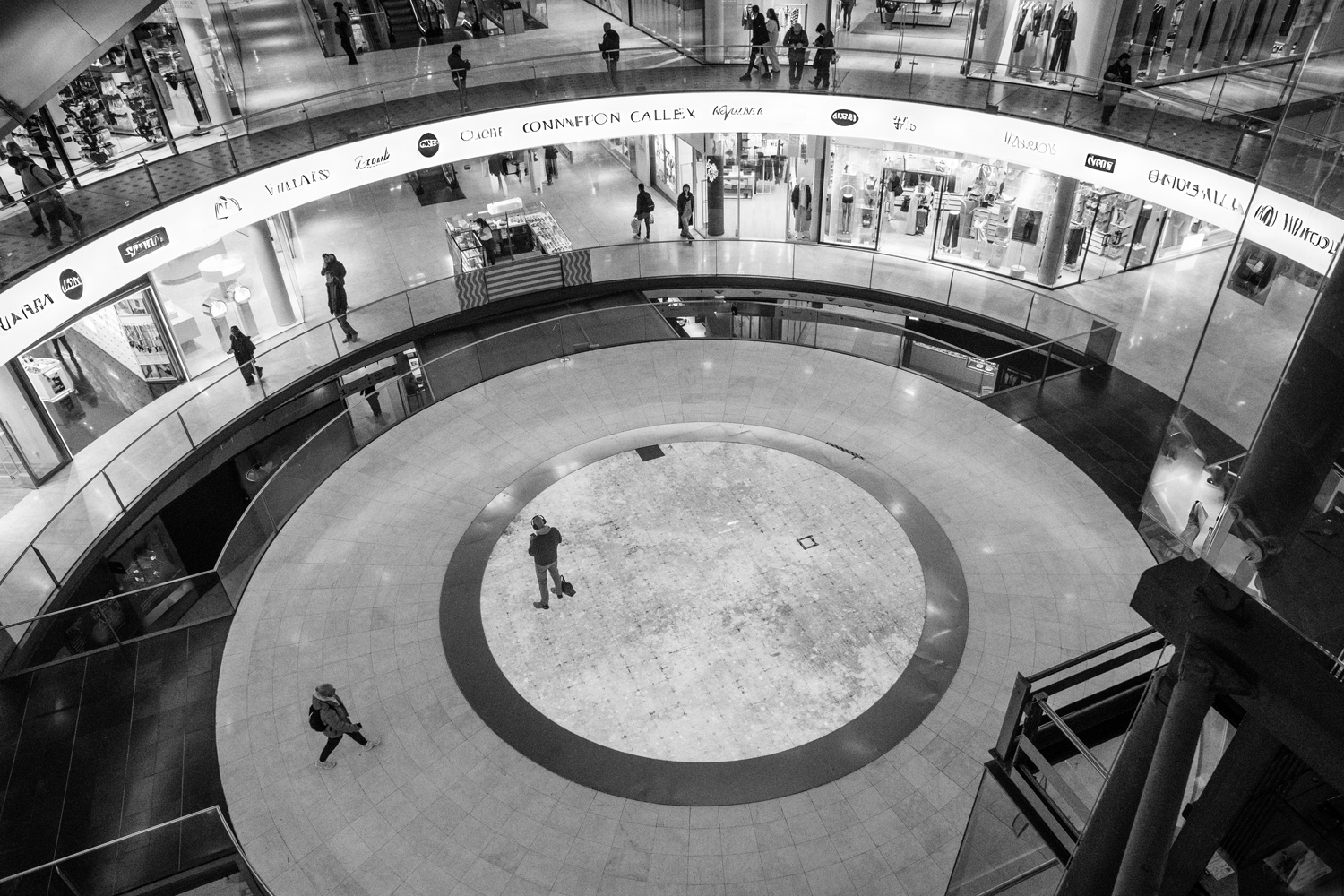
Black-and-white overhead view of a circular shopping-centre atrium with a few people crossing the floor, ringed by an illuminated band of store names in garbled AI-generated text
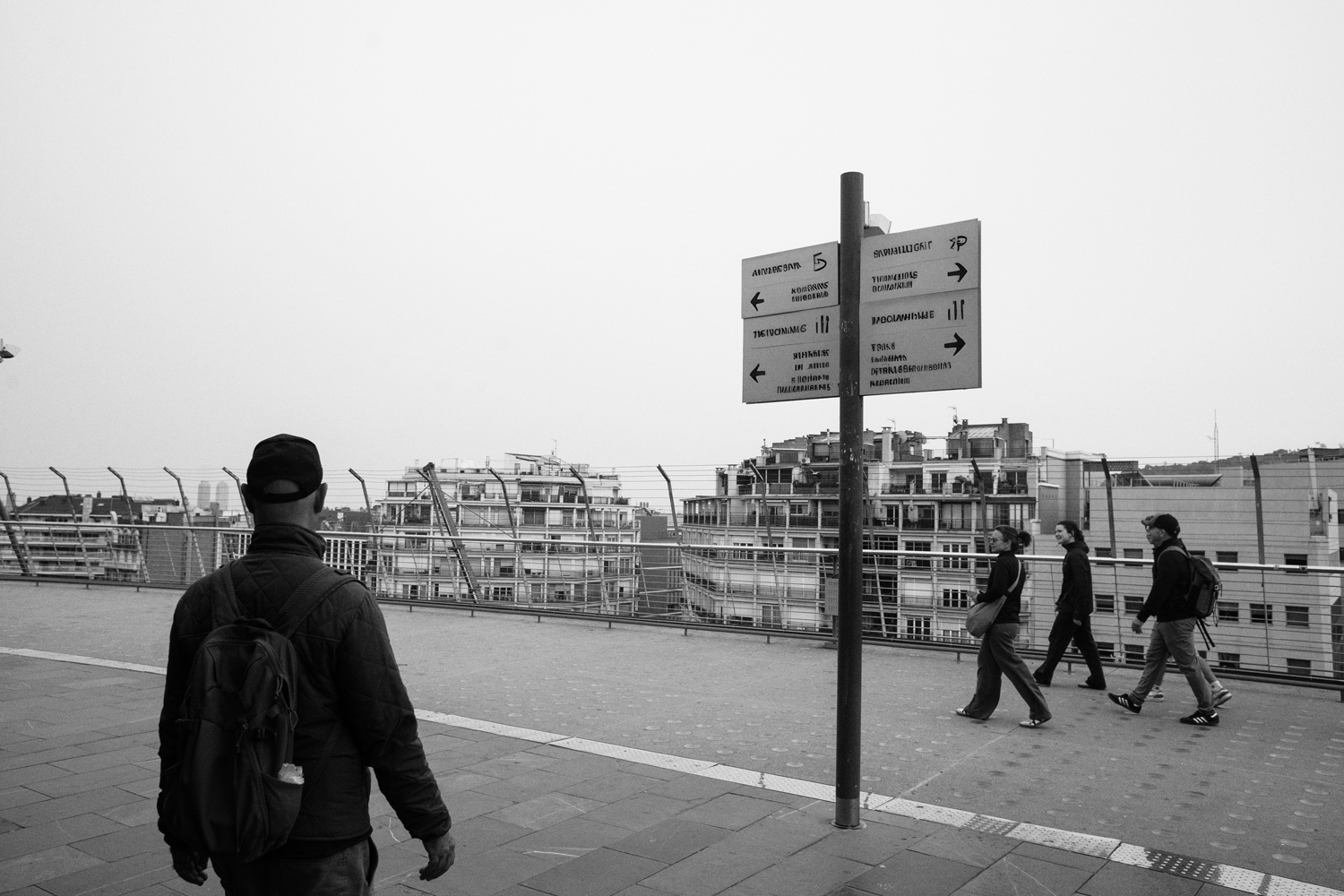
Black-and-white photo of people crossing a rooftop walkway in front of apartment buildings, past a signpost whose arrows point to destinations written in illegible AI-generated text

Generative Language

In researching the Seven Pillars of Colonialism, I was curious how AI usage plays a part in this framework. One pillar is titled “Killing cultures,” which outlines forcing native populations to speak the language of the colonizer.

AI has an ever-evolving visual language. Each generation changes how we view and detect its usage. Text is often scrutinized as a possible tell that AI has been used to generate an image.

This series aims to explore a society where the text language of a specific AI generation becomes the global written language.

The Juggernaut SDXL model was used to generate images using the original photographs as a reference. Text was then replaced in each photo with the new, global language.